
6:00pm Reception
6:30pm Program
Examining the 2026 Midterm Election
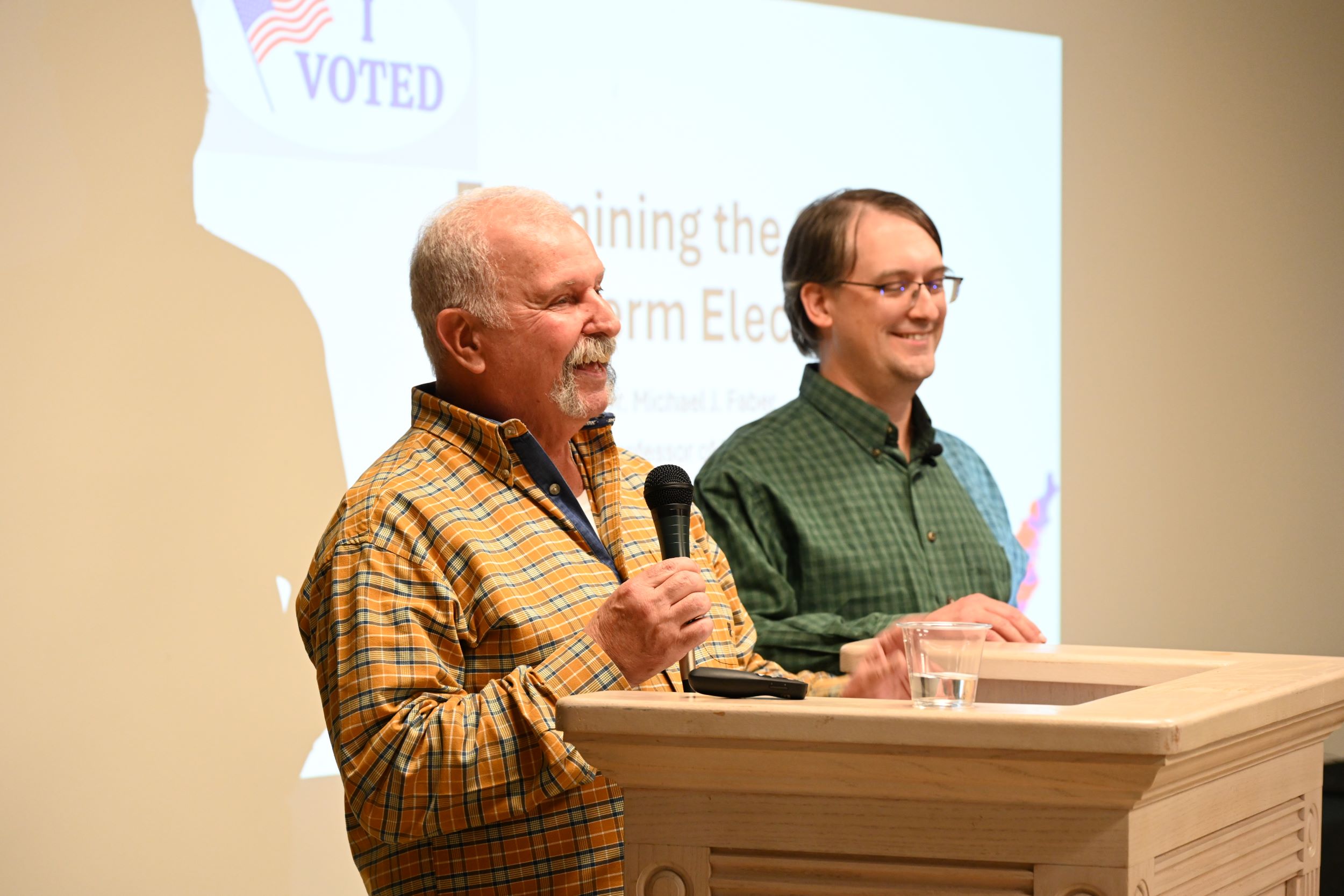
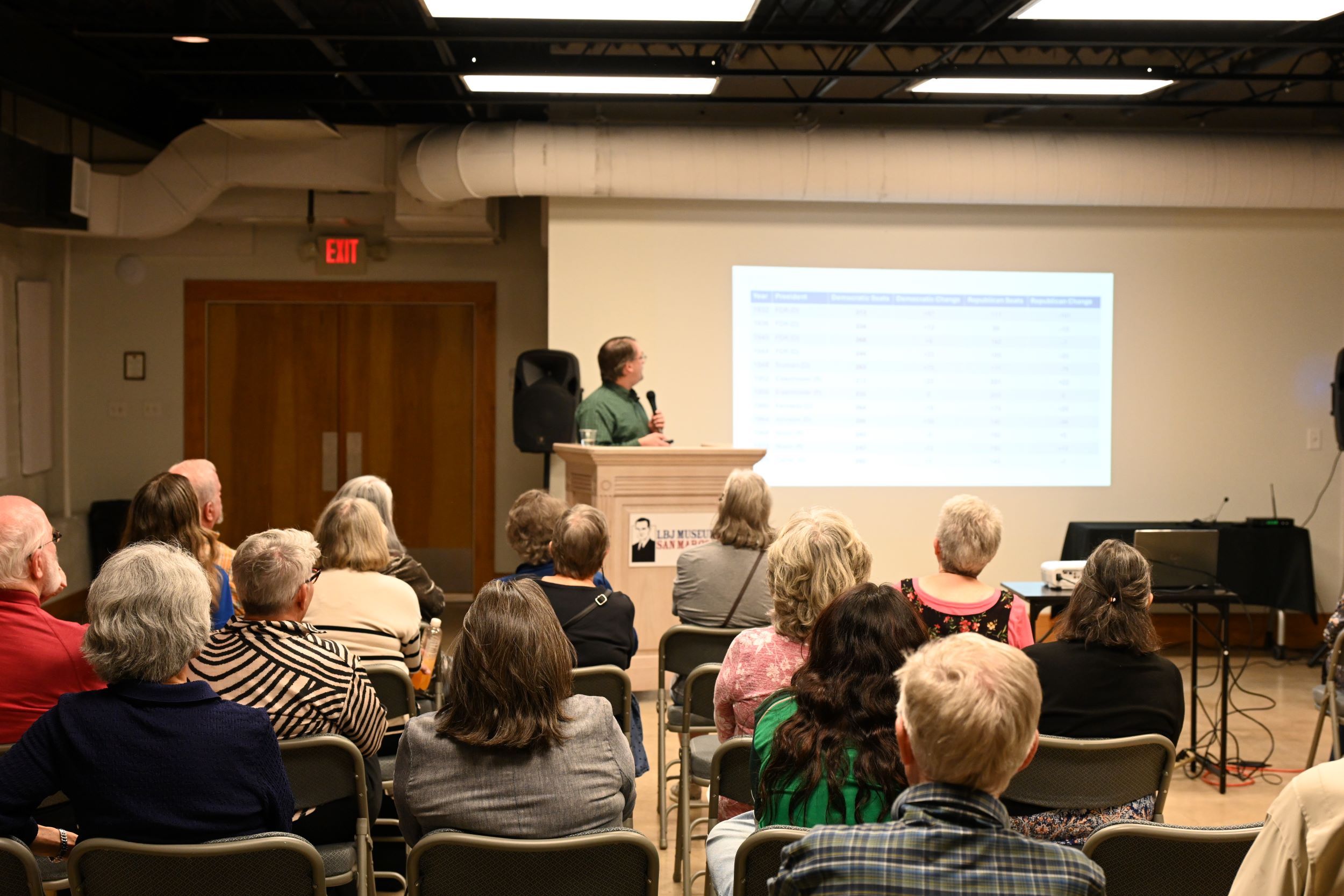
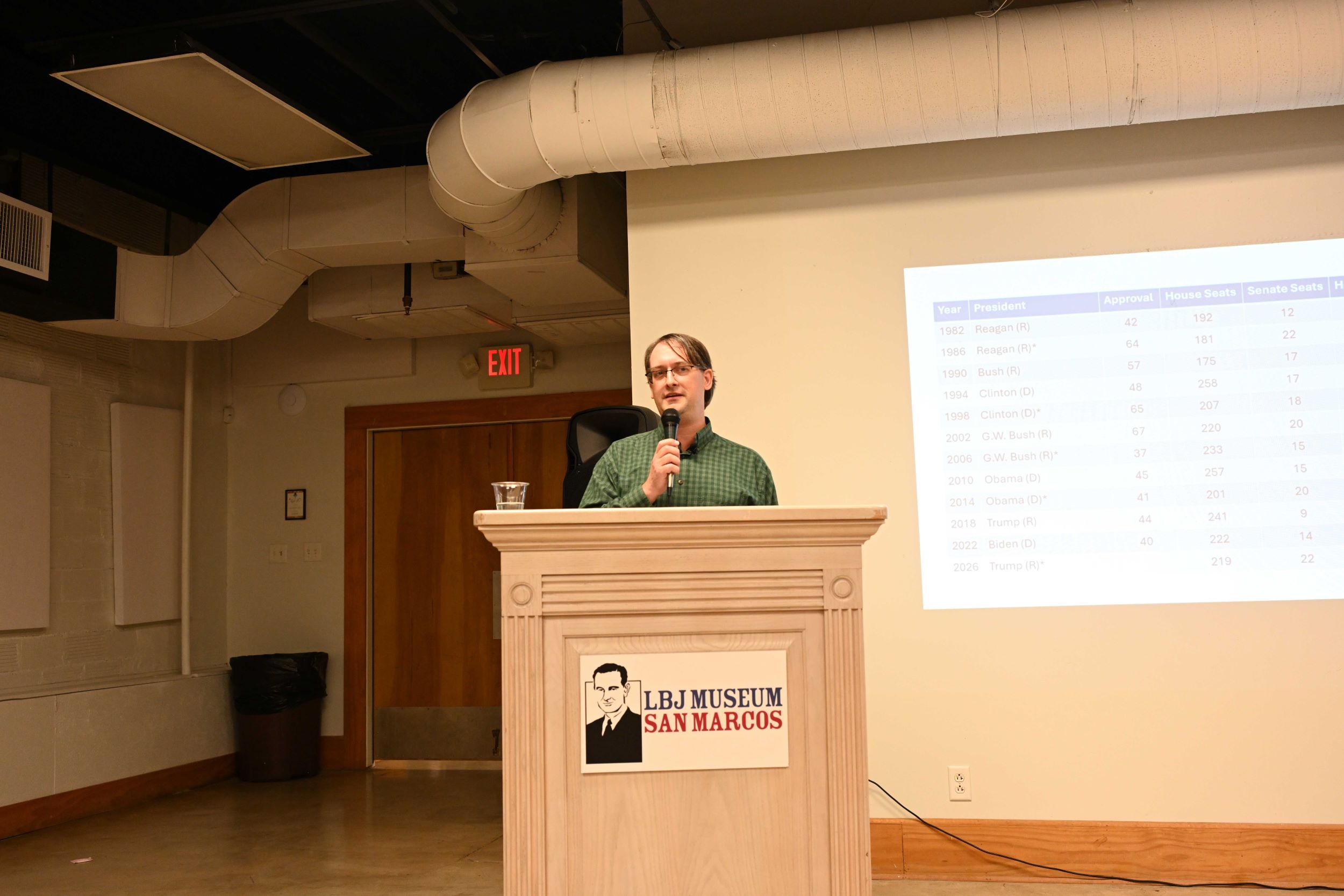
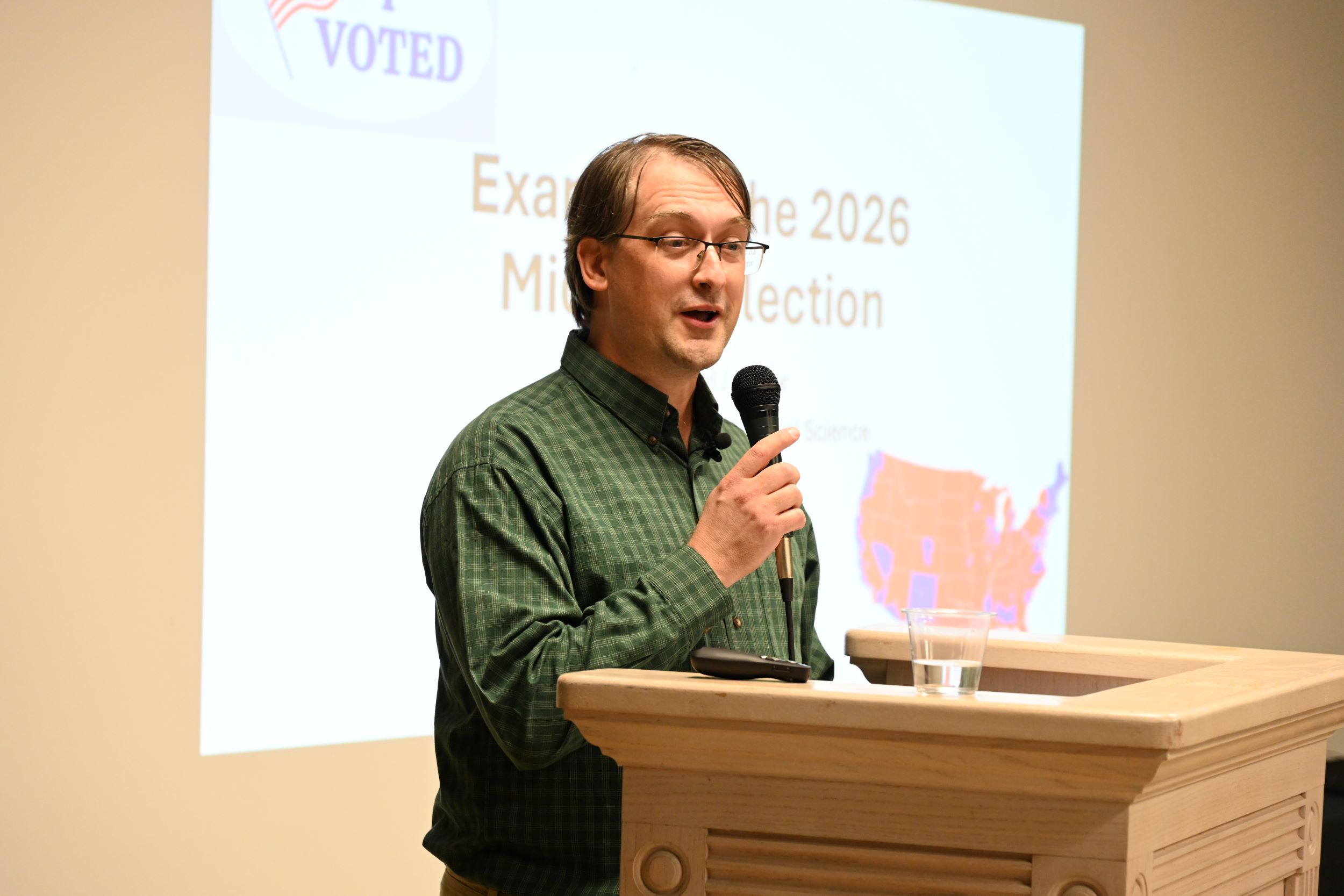
The LBJ Museum of San Marcos recently hosted Dr. Michael Faber for our Fall Lecture. During his address, he offered predictions just days into the early voting period.
Faber, an associate professor of political science at the Texas State University College of Liberal Arts, highlighted several factors that could influence the upcoming 2026 midterm elections. He referred to historical trends that typically favor the party not in power, positive polling for Democrats and the president’s low approval ratings as indicators that Democrats might gain traction. However, he cautioned that polling is inherently imperfect and cannot guarantee election outcomes. “History suggests that at least the House will change hands, if not the Senate,” Faber stated. He noted that while Franklin Roosevelt gained seats in his first midterm, subsequent elections, particularly through the Carter administration, demonstrated that incumbents often lose seats. Kennedy’s midterm was an exception, where he lost only a few seats, whereas other presidents faced losses of 20, 30 or even 40 seats.
Faber explained that several factors contribute to these trends. Generally, the party out of power exhibits greater motivation to vote, while supporters of the incumbent party may become complacent and refrain from voting. He mentioned the concept of “presidential coattails,” where winning the presidency traditionally brought many party members into Congress. However, he observed that this effect has weakened over time.
Faber identified the House of Representatives as the clearest opportunity for a Democratic victory. He pointed out that Democrats have more safe and favorable districts, while Republicans face a significant number of vulnerable seats, including several toss-ups leaning Democratic. According to his analysis, Democrats hold 184 seats deemed “safe” and an additional 20 that are fairly likely to be retained, whereas Republicans have approximately 160 safe seats and 29 likely to be won.
Regarding the Senate, Faber predicted substantial gains for Democrats, with the potential to flip several Republican-held seats. He expressed particular surprise at the prospect of South Carolina electing a Democrat and predicted that James Talarico would defeat Ken Paxton in Texas.
While Faber acknowledged the usefulness of polling, he also noted its limitations. Polls have inherent margins of error and the respondents may not accurately represent the broader electorate. Pollsters adjust their samples based on expected voting demographics, meaning that erroneous assumptions can lead to inaccurate estimates. Nonetheless, he maintained that polling outcomes generally align closely with actual results.
One of Faber’s most striking observations was the unprecedented early-voting turnout in several states, which approached general election levels, a trend he characterized as “really rare” for a midterm election.
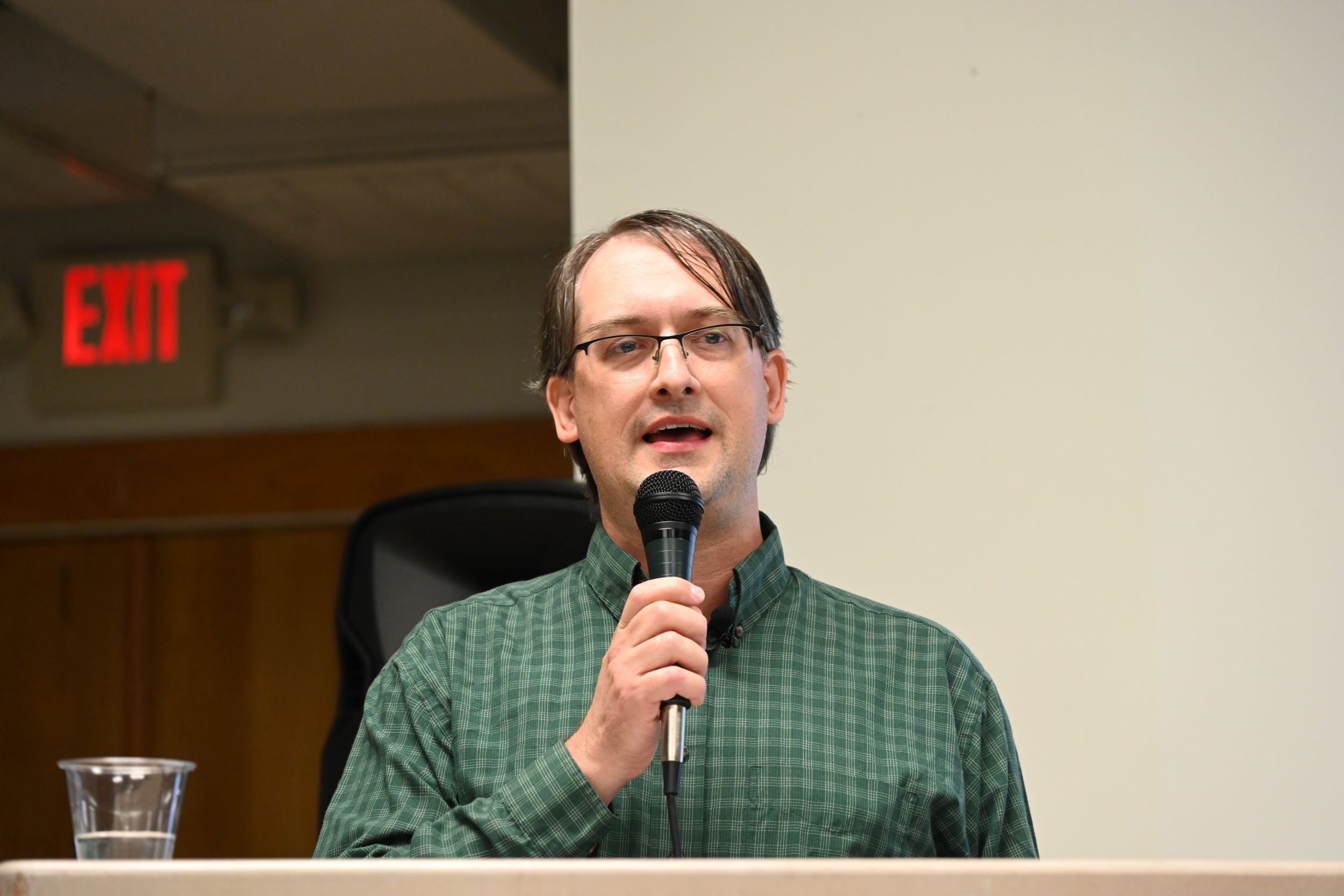
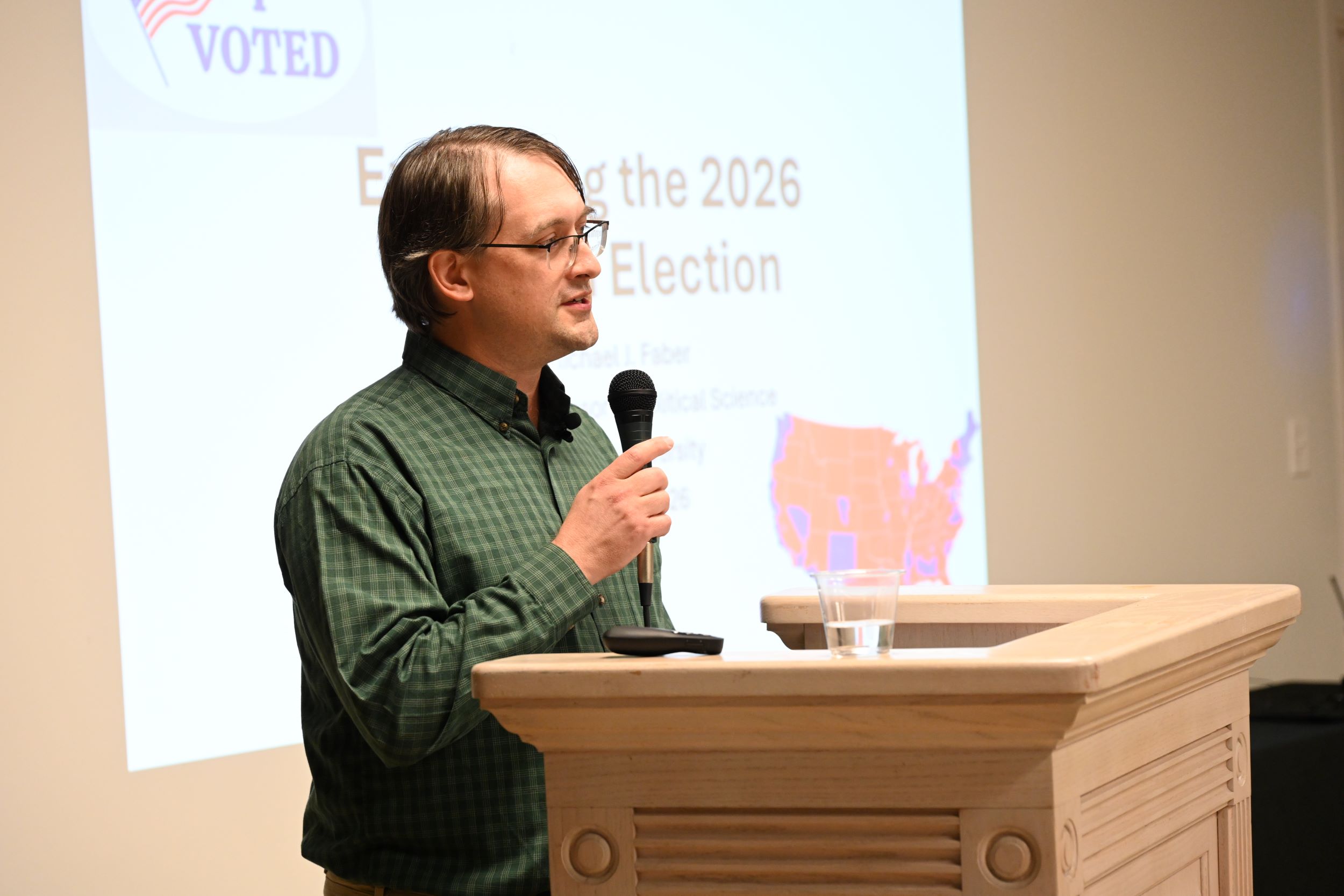
PHOTOS COURTESY OF SHANNON WEST with the San Marcos Daily Record
